


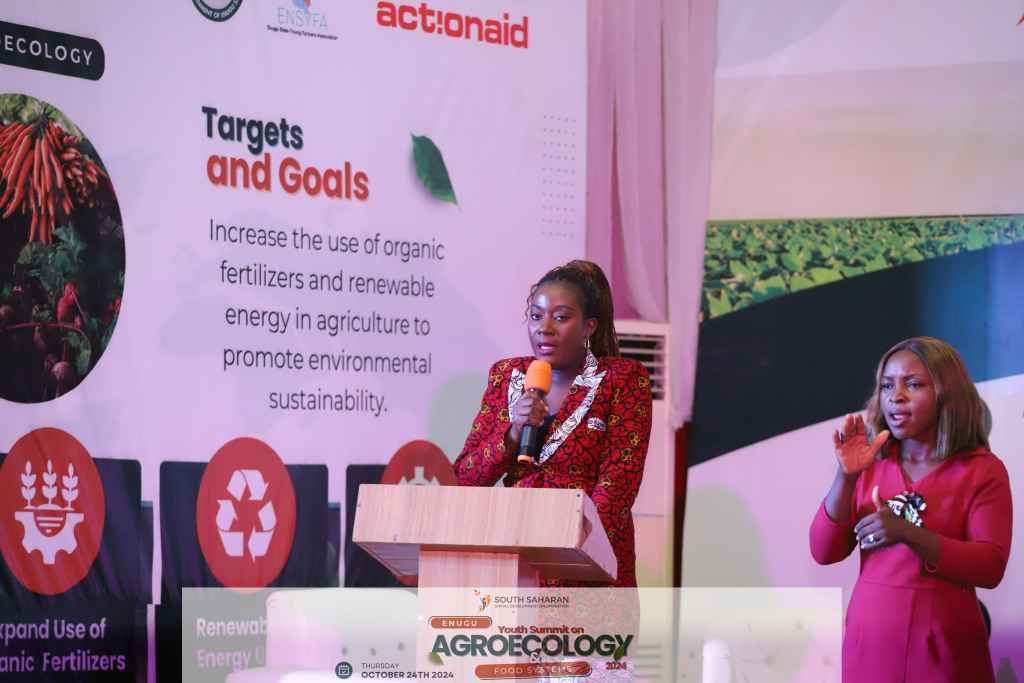
In a world where agricultural practices are increasingly industrialized, the recent Agroecology & Food Systems Summit in Enugu has been a vital reminder of the importance of sustainable, community-driven food systems. Hosted by South Saharan Social Development Organization (SSDO) in collaboration with ActionAid Nigeria, this gathering brought together a dynamic array of farmers, policymakers, researchers, and youth leaders dedicated to promoting agroecology. The summit highlighted the pressing need to shift away from chemical-intensive farming practices to more sustainable, organic approaches that prioritize food security, biodiversity, and human health.

Why Agroecology Matters
Nigeria, like many countries worldwide, faces significant challenges in sustaining its agricultural sector while also protecting its natural environment. The summit explored why agroecology—a practice that integrates traditional farming methods with environmental science—can be the key to securing resilient, local food systems. Embracing agroecology means nurturing the land, reducing dependency on chemical fertilizers and pesticides, and improving the overall health of crops, soils, and the communities that depend on them. For Enugu State farmers, particularly, agroecology offers a sustainable approach to farming that helps safeguard their livelihoods in the face of economic and environmental challenges.
SSDO’s Role in Supporting Enugu Farmers
Recognizing these challenges, SSDO and ActionAid Nigeria organized the summit as part of their broader commitment to supporting sustainable agriculture and community resilience in Enugu State. Over the years, SSDO has provided farmers—especially women—with training and resources to adopt eco-friendly farming practices that promote soil health, conserve biodiversity, and reduce harmful environmental impacts. During the summit, Mr. Udochukwu Egwim presented a video showcasing SSDO’s impactful work, featuring farmers who have adopted agroecology principles. Women farmers shared testimonials of their transition to sustainable farming practices, such as utilizing livestock waste and organic materials as compost and natural pesticides. Through these shifts, they are seeing improved crop yields, economic savings, and stronger community bonds.

Core Takeaways from the Summit
A few key insights and discussions emerged from the summit, underscoring the importance of agroecology and sustainable farming practices:
1. The Power of Growing with Nature: “Agroecology is about growing food with nature, not against it,” said Prof. Dickson Musa, a respected voice on sustainable agriculture. His presentation emphasized how native seeds and livestock contribute to a resilient agricultural ecosystem, underscoring the adaptability and value of indigenous species for local food systems.

2. Empowering Women and Youth in Agriculture: One of the central themes was the empowerment of youth and women, who often face barriers to accessing resources and land ownership. Panelists discussed programs to support young farmers through training in agroecology and the development of sustainable enterprises, encouraging a new generation of agroecology-driven businesses that foster economic growth while preserving natural resources.

3. Policy Advocacy and Funding for Sustainable Agriculture: To make agroecology a reality, there is an urgent need for supportive policies and funding. Speakers highlighted the importance of harmonizing pesticide standards, providing financial incentives for biopesticides, and creating policies that protect local agriculture. A call was made to government and private sector partners to fund organic farming inputs and foster a more supportive environment for smallholder farmers.

Outcomes and Next Steps
The Agroecology & Food Systems Summit has laid a robust foundation for ongoing collaboration and action among stakeholders. Attendees left with a renewed sense of purpose, encouraged by the achievements and commitment demonstrated during the event. The summit set out to inspire farmers to integrate agroecological practices in their farming and successfully fostered a greater awareness of the environmental and economic benefits of sustainable agriculture.

SSDO is deeply grateful to all panelists, partners, and participants whose insights and passion made this summit a milestone for sustainable agriculture in Nigeria. Through such partnerships and initiatives, SSDO remains committed to empowering farmers, advocating for agroecological policies, and cultivating a more resilient food system across Nigeria. Together, we can build a sustainable, food-secure future.