


Welcome to the third edition of SSDO’s Quarterly Newsletter!
We are excited to share with you the latest updates on our mission to make development happen for women, youth, and children through good governance and education. As we delve into the heart of 2023, we remain steadfast in our commitment to driving meaningful change.
In This Issue:
Tackling Gender-Based Violence: Our frontline advocates continue their unwavering efforts to eradicate gender-based violence in our project communities. We’d take you behind the scenes to meet the heroes who make up our Gender-
Based Violence Response Teams, their inspiring stories, and the impact they are creating.
Health: Learn about our initiatives aimed at promoting holistic health and well-being. We believe that a healthy body and mind are crucial to empowerment, and we’re dedicated to improving healthcare access in underserved areas.
Climate Justice: Climate change disproportionately affects vulnerable populations, including women and children. Discover how we’re addressing this pressing issue and championing climate resilience within our communities.
Youth Advocacy: Young people are at the forefront of change. We celebrated International Youth Day with gusto and engaged youths on other fronts, highlighting their voices and contributions to their community development.
Water, Sanitation, and Hygiene: We understand access to clean water and sanitation is a fundamental right. We’ll share the progress we’ve made in providing WASH facilities and education to marginalized communities.
in decision-making through town hall meetings, monitoring and tracking activities, focus groups, and open dialogues.
In every section of this newsletter, you’ll find stories of hope, resilience, and determination. We invite you to read on, share our stories, and join us in the advocacy for a more just and inclusive world.
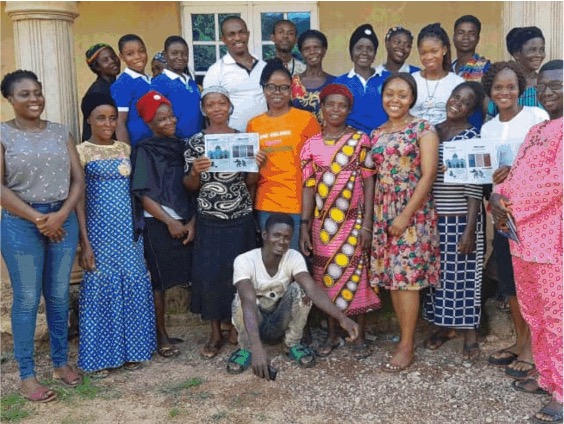
SSDO, ActionAid Establish Gender-Based Violence Response Teams in Project Communities

Gender-based violence (GBV) remains a significant issue in our society, especially in rural communities, causing immense harm and violating the fundamental rights of individuals, particularly women and girls.
Women often cower in fear as their source of livelihood is tied to their abusive partners. Addressing GBV requires collaborative efforts from government agencies, community stakeholders, and civil society organizations.
Understanding this challenge, South Saharan Social Development Organization, in partnership with ActionAid Nigeria, under the Local Rights Programme in Enugu State, established a GBV response team in three communities: Ihenyi and Orokoro communities in Isi-Uzo LGA and Igga community in Uzo Uwani LGA.
Monitoring: A Key to Sustainability in the WASH Sector

We understand that executing a project and moving on to others is not enough. There’s the place of adequate monitoring and evaluation to improve learning and the ability to make data-driven decisions. As well as improved allocation of resources for future interventions. Understanding this, South Saharan Social Development Organization, in partnership with WaterAid Nigeria and The Church of Jesus Christ of Latter-Day Saints team, conducted a comprehensive field visit and assessment in Enugu State to evaluate the effectiveness of existing water, sanitation, and hygiene (WASH) interventions under the Latter-Day Saints Charity Project. This helped to assess the impact of phases one and two of the WASH projects implemented in the state.
The evaluation was done to determine the functionality and impact of three projects: Amufie Water scheme in Igbo Eze North LGA, Ukwuinyi Water scheme in Igbo Eze North LGA, and Garriki Market Sanitation Facility 1 and 2 in Enugu South LGA. Other stakeholders present include the Ministry of Water Resources, ENRUWASSA, contractors, the Igbo Eze North LGA Chairman, and the LGA WASH unit. The projects have improved the communities’ access to clean water, improved sanitation practices, and enhanced hygiene behaviors.
SSDO Becomes a Founding Member of the Nigerian Climate Justice Alliance

South Saharan Social Development Organization, SSDO, participated in a Climate Justice Workshop and the inauguration of the Nigeria Climate Justice Alliance (NCJA) organized by NCF Nigeria with support from Ford Foundation. The NCJA is a coalition of civil society organizations with a track record of climate actions nationwide and the potential to advocate and accelerate climate justice issues.
The coalition aims to strengthen civil society’s voices in tracking, monitoring, and supporting sub-national and national governments in delivering climate actions and plans. It will help civil society members lead community-driven climate and nature- based solutions projects nationwide. Thus establishing a strong voice and charting a pathway on climate justice. SSDO’s Head of Programs, Udochukwu Egwim, represented the organization at the conference held at Bolton Whites Hotel and Apartment, Abuja, on the 25th and 26th of July 2023. SSDO is committed to climate justice for rural communities and
Christian’s Story: Finding Hope in a System That Works

Christian is a farmer and proud father of three children who lives in Aninri. He works tirelessly, cultivating the land and selling the farm products to support his family. The town is a farming community and serves as the main source of Christian’s family income.
However, his life took an unexpected turn when he contracted tuberculosis. This debilitating illness brought everything to a halt, leaving him unable to carry out even the simplest tasks without assistance. He was confined to the bed for several months, plagued by symptoms such as rapid breathing, persistent coughing, and constant dizziness.
“I am the breadwinner of my family. But when the illness started, I couldn’t take care of my kids anymore. It was a challenging time for me and my loved ones.”, he shared. Find out how South Saharan Social Development Organization intervened and helped Christian.
DR-TB Project Monitoring and Supervision

On the pathway to behavior change, it is not enough to implement project activities and hope for the best. It is important to monitor and evaluate implementation at all stages. This helps improve evidence-based decision-making, improved performance, better resource allocation, quality assurance, real-time learning, and long-term sustainability.
Understanding this, the Association for Reproductive & Family Health-ARFH, conducted a supervisory visit in Enugu state alongside South Saharan Social Development Organization. The aim was to evaluate progress made on the Drug- Resistant Tuberculosis Project funded by The Global Fund.
Dr. John Osho, Programme Manager, TB Global Fund project of the Association of Reproductive and Family Health, ARFH, visited the state office, SSDO office, patient’s homes, tuberculosis lab at the hospital, TB stores, and the Direct Observed Therapy Centers. This will help to identify the pressing challenges and ascertain the need assessment of beneficiaries in the program.
Over the quarter, SSDO’s health officer provided adherence counseling to the project beneficiaries. The project conducts household visits and provides monthly transport support to the patients and their treatment supporters.
International Youth Day 2023 Commemoration

Nigeria’s youth make up about 60 percent of the country’s populace. Making it one of the world’s youngest populations. With such a vibrant demographic, you’d expect a thriving economy, innovation, creativity, accelerated human capital development, and long-term stability. But this is not directly the case. And the difference between where we are and where we ought to be as a nation is skills.
Understanding this challenge, South Saharan Social Development Organization, in partnership with ActionAid Nigeria, under the Strategic Partnership Agreement Phase II project, is playing its part in increasing the participation and skills of young people to thrive in a green economy. The International Labour Organization (ILO) projected that the green transition could create 8.4 million jobs for young individuals by 2030. To seize these opportunities, young people must be equipped with green skills to navigate the changing landscape effectively.
Recognizing the urgent need to address these issues, and in line with our commitment to empowering women and youths, SSDO commemorates International Youth Day 2023, tagged Green Skills for Youth: Towards a Sustainable World, with a 1-day symposium. Participants are now more knowledgeable about green skills and empowered to take action. Sessions covered waste management, recycling, agribusiness, agroecology, renewable energy, and using social media as an advocacy tool for sustainability.
Charting a New Course for the WASH Sector

Enugu State’s WASH Stakeholders paid a courtesy visit to the newly appointed Commissioner for Water Resources, Dr. Felix Nnamani. The delegation, led by WaterAid Nigeria, included South Saharan Social Development Organization, SSDO, and various CSOs.
The team used the opportunity to discuss and agree on a roadmap for partnership with the state government to deepen WASH service delivery in Enugu State. And shared insights into the team’s initiatives.
Key issues brought to the notice of the commissioner include:
- Implementation of the Enugu State Water Sector Law 2021.
- Declaring a state of emergency in the sanitation sector to fast-track the Open Defecation Free Vision 2025.
- Sustainability and strengthening of the WASH Sector Partnership Forum.
These and more were discussed during the meeting. Representing SSDO were the Head of Programs, Udochukwu Egwim, and the Finance and Admin Manager, Amaka Okoye. SSDO is committed to improving access to WASH facilities for residents of Enugu state.
SSDO, WaterAid Nigeria Commissions Ukwuinyi Water Scheme

In Nigeria, more than 60 million people do not have access to basic water supply. Over 12 million people lack access to toilet facilities. About 29 percent of children do not have water to meet their daily needs. Thus affecting their ability to attend school and wash their hands properly to fight off diseases. In Enugu, half of the state’s residents lack access to basic water services.
Understanding this challenge, South Saharan Social Development Organization, in partnership with WaterAid Nigeria through the Latter Day Saints Charity Project, has provided a 40,000-liter water scheme at Ukwuinyi community, Igbo-Eze North LGA, leveraging the kiosk model to ensure proper dissemination. This is part of the interventions under the second phase of the Strengthening Water and Sanitation Delivery Project.
The water scheme will help to reduce open defecation and keep Enugu on course to achieve an open defecation-free status by 2030. It will reduce the likelihood of waterborne diseases like cholera, diarrhea, and dysentery that the community suffers before the installation. And help community children focus more on their education as the distraction of going long distances to draw water has been eliminated.
SSDO Commemorates August Meeting in Three Communities in Enugu and Anambra State

The Mother’s Congress, popularly known as August Meeting in Igbo land, is a time when Igbo women from the cities and diaspora return to lend helping hands to their communities. They embark on projects to improve healthcare, peacebuilding, and educate the community.
To show solidarity in projecting and supporting the roles women play in family and community development, South Saharan Social Development Organization, through her Sister Guardian Initiative project, visited three communities to commemorate this year’s August meeting with them. They include; Ibutenze in Udi LGA, Awha Ndiagu in Ezeagu LGA in Enugu state and Omor in Ayamelu LGA in Anambra state.
SSDO Gender and Protection Programme Lead, Blessing Uchendu, and Jacob’s Well Project Officer, Stella Ani, built the capacity of the women on causes and effects of domestic violence against women and girls, how to report it, where to report it and how to follow it up. The team used the medium to create and intensify awareness of women’s rights and the law.
Other pressing issues discussed during the capacity-building event include economic empowerment, political inclusion, violence against women, female genital mutilation, and advocacy. The team also sensitized the women on how to leverage Jacob’s Well platform to grow their businesses. At the end of the training, the women were enlightened on handling issues around gender-based violence.
SSDO, ActionAid Works to Improve Education in Rural Communities

characterized by poor access to healthcare and education, lack of infrastructure, and low income levels. This affects their standard of living and quality of life, of which kids are the biggest victims.
Understanding this reality, South Saharan Social Development Organization, in partnership with ActionAid Nigeria through the Local Rights Programme, is doing its part to improve education in marginalized communities. The program aims to reduce poverty by increasing its engagement with the poor and marginalized in selected communities through its Child Sponsorship mechanisms. The child sponsorship initiative identifies vulnerable children aged 3 to 8 years and attaches them to sponsors.
Over the past collection period, the team collected over 740 child messages across eight communities. Our motivation is to see the children and the communities at large be all that they can be. This activity allowed the team to keep tabs on the kids and monitor their development process. As well as get feedback from the kids to the sponsors.
Enugu State 2022-2024 Budget Project Tracking and Monitoring Activities

Citizens must do more than just observe their government’s budgets; they must actively engage in budget tracking, particularly for community projects within these budgets. This proactive involvement empowers individuals, ensuring government accountability, transparent resource allocation, and community development ownership.
Following the budget tracking and monitoring training conducted under the Strategic Partnership Agreement Project II, the youths have identified key capital projects in the Enugu state 2022 – 2024 budget earmarked for their respective LGAs (Aninri, Enugu South, Igbo-Eze North, and Isi-Uzo). The youths who are members of the Community Accountability Committees from the four LGAs have embarked on the capital project monitoring and successfully identified these projects and their current states.
Enugu 2022-2024 Budget Town Hall Meetings

The goals of the Strategic Partnership Agreement Phase II include engaging youth groups in demanding socially responsible gender-responsive public services, enhancing youth resilience and their role in crisis response, influencing policy and legislation through evidence-based advocacy, leading collective actions to reduce vulnerabilities and build resilience.
After the Community Accountability Committees completed the project tracking and monitoring, they proceeded to present their findings to their various LGAs in a town hall meeting. South Saharan Social Development Organization, in partnership with ActionAid Nigeria, organized a 1-day Community Engagement for Inclusive Development Town Hall Meetings in each community, aimed at fostering dialogue and collaboration among stakeholders in the four communities.
The town hall meetings were an avenue for:
- The committees to present and discuss the findings from the youth-led budget tracking/monitoring assessment.
- The committees to engage in dialogue with community and government stakeholders to determine the way forward based on the assessment results.
- The SSDO team to conduct a community needs assessment to identify priority projects for inclusion in the next budget cycle.
- The committees to document and present the meeting outcomes as an advocacy brief to the respective Local Government Areas (LGAs), Enugu State Ministry of Budget and Planning, and the Enugu State Economic Planning Commission.
Empowering Communities Through Effective Monitoring

Monitoring and evaluation is critical to the success of any intervention. It helps improve evidence-based decision-making, improved performance, better resource allocation, quality assurance, real-time learning, and long-term sustainability.
Understanding this need, South Saharan Social Development Organization, in partnership with ActionAid Nigeria, conducted monitoring and evaluation visits to various project sites under the Local Rights Programme to ascertain the level of progress made on the project. The monitoring evaluated the progress of the women’s peer education groups, GBV response teams, agroecology training, and the impact of child message collection in the target communities.
The GBV response teams have solved over five cases since their inception. This includes cases of child abuse, land disputes, and gender-based violence cases. The child message collection activities have empowered kids with water bottles, food flasks, writing materials, and desks. This improved the kids’ learning environment and outcome. A teacher told the team, “The children are excited about the writing materials and desks. They come to school earlier. Those who don’t come often now come regularly.” The team also held a community stakeholder meeting to finalize on the construction of more desks in Ihenyi community
