

Nigeria’s climate has been changing: temperature increases; variable rainfall; rise in sea level and flooding; drought and desertification; land degradation; more frequent extreme weather events; affected freshwater resources, and loss of biodiversity. The durations and intensities of rainfall have increased, producing large runoffs and flooding in many places in Nigeria.
Rainfall variation is projected to continue to increase. Precipitation in southern areas is expected to rise, and rising sea levels are expected to exacerbate flooding and submersion of coastal lands. Droughts have also become a constant in Nigeria and are expected to continue in Northern Nigeria, arising from a decline in precipitation and rise in temperature. Lake Chad and other lakes in the country are drying up and at risk of disappearing.

Floods are a recurring natural hazard in Nigeria and have become more frequent throughout the country in recent decades. Agriculture, health, infrastructure, the economy, and trade are all negatively impacted, as evidenced in 2012 when severe floods contributed to reduced economic growth in agriculture and trade. This is coupled with the trigger of the Lagba Dam in Cameroon which has drastically increased the level of flooding in the country affecting over ten states.

Increased flooding due to rising sea levels will negatively impact agriculture, the economy, coastal infrastructure, human health, coastal ecosystems, and human settlements. Sea levels have been rising along the coast of Nigeria, causing coastal erosion and some villages to be lost. It has been estimated that a 1-meter rise in sea level could cause 75% of the land in the Niger Delta to be lost.

Over the past few weeks, different states have felt the sting of the floods. In as much as the government has a role, we also have a part to play to ensure the earth is habitable and safe. The effect of human activities has a telling effect on the atmosphere. And nobody is exempted from these devastating effects. Hence, the need for sensitization to raise awareness about climate change.
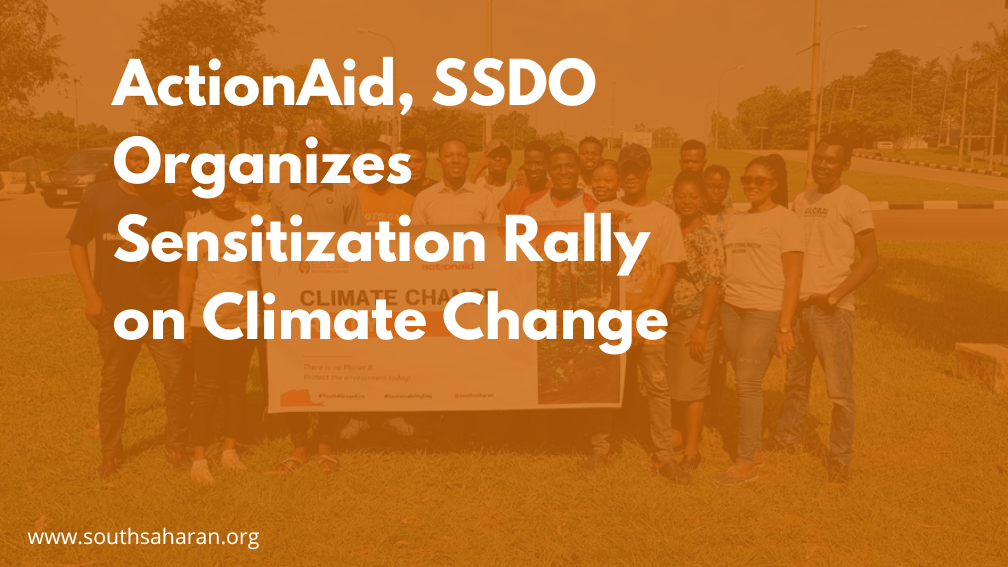
Understanding these effects, ActionAid Nigeria, in partnership with South Saharan Social Development Organization, is playing its part in creating awareness and sensitizing people on steps to take to combat climate change. The message was simple: “There is no planet B. Protect the environment today.”

The rally also sensitized people on what they can do to protect the environment from their corner:
– Cut down waste
– Conserve water
– Plant a tree
– Walk more
– Spread the word.
