

Studies from the Nigerian Economic Summit Group revealed that 91 million Nigerians live below the poverty line. With an additional, eight million people pushed into poverty in 2021. Interestingly, about 60 percent of people living below the poverty line are women. Unemployment, unpaid labor, gender discrimination, and marginalization are mostly responsible for it.
In many communities, women are largely dependent on their spouses for their financial needs. This dependence is one reason why women fail to report gender-based violence. They fear they’d lose their financial support and become stranded.

This dependency also means that these women are largely unbanked and would be next to impossible to access loans from traditional institutions. Their lack of access to assets of their own also means they don’t have any form of capital that can suffice as collateral. In our line of work, we’ve seen that this economic disparity engenders gender-based violence.

Understanding these peculiar challenges, South Saharan Social Development Organization empowers them to be financially independent, thus reducing poverty and dependency.
One such way we do this is through Jacob’s Well micro-credit scheme. SSDO makes loans available to women in a cooperative at low-interest rates to start or sustain their businesses. The organization empowers these women with no collateral required leveraging the social trust within the cooperative mechanism to ensure compliance across the board.

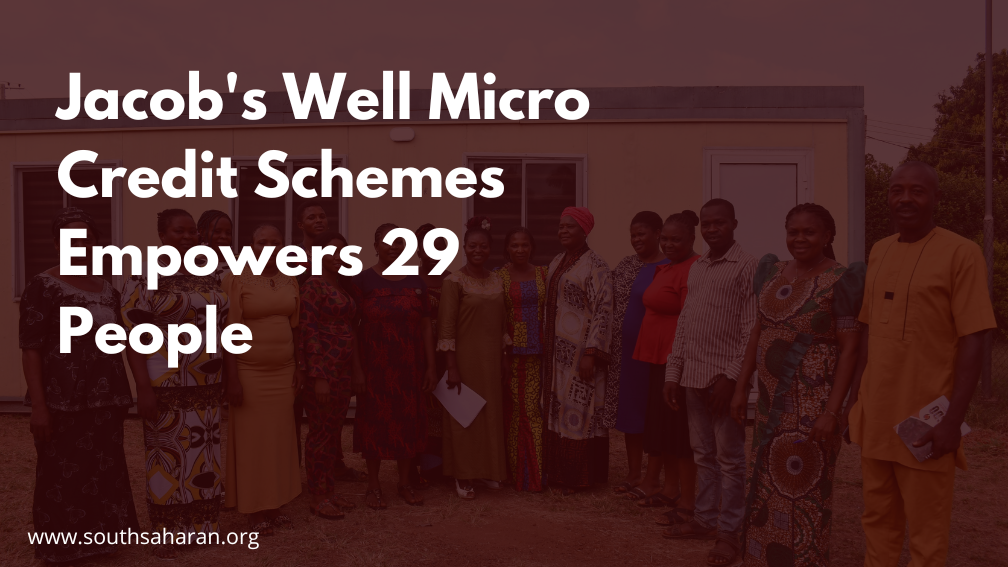
In November, 29 loan collectors across three registered cooperatives got loans to grow their businesses. They were trained in financial literacy, risk management, savings culture, business and cooperative management to help sustain and grow the venture.
A sum of 2.85 million naira was disbursed to these women with no collateral required leveraging the social trust within the cooperative mechanism to ensure compliance across the board.
