


Vultures in Eke-Ihe community
Do you know that vultures and other scavenging animals are the natural cleaning agents that the earth has? Often, when people hear or see vultures, they automatically associate them with words like dirt, ugly, and evil. Yet they play an important role in keeping the ecosystem’s balance.
Through their scavenging activities, they control the amount of bacteria that would have spread to the human population. Hence, keeping the ecosystem clean and directly protecting humans from infectious diseases such as anthrax and rabies. Without vultures, the carcasses will lead to air pollution and microbes will multiply.
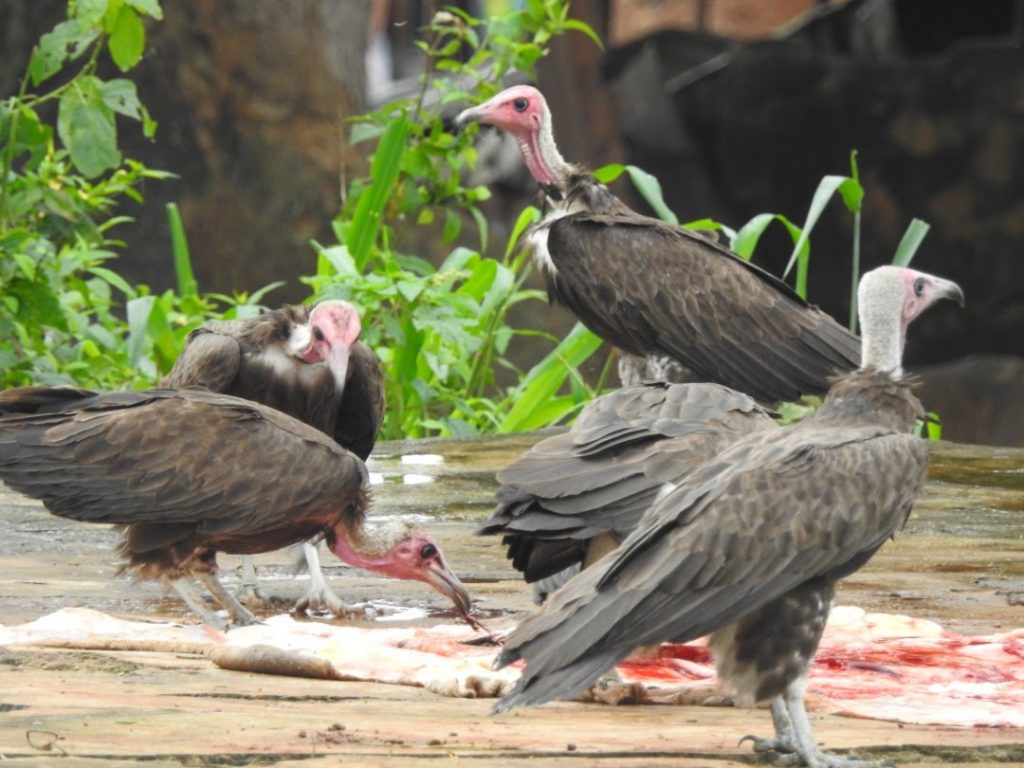
By feasting on dead animals, they reduce the likelihood of a swarm of flies gathering and help to keep their population in check. Vultures have a highly corrosive stomach that allows them to digest carcasses without being affected as compared to other animals. The enzymes also process these substances in their stomach ensuring that when they release their waste it is bacteria-free.
In the absence of vultures, animals like dogs and rats do the scavenging. Due to their close contact with humans, there is a high probability that the diseases picked up will be transferred to humans.
The Problem
Having understood the importance of vultures to the ecosystem, preserving them becomes a top priority. Vultures can be found in North and South America, as well as East and West Africa, particularly Nigeria.
“Vulture population has decreased by over 70% in Nigeria in the last 40 years”. – Dr. Muhtari Aminu-Kano, DG, NCF.
There has, however, been a huge decline in the vulture population across Nigeria. Wildlife trade, hunting, poaching, spiritual and traditional healing practices are the primary causes of this decline. Studies from Nigerian Conservation Foundation (NCF) also show that 500 tons of vultures are trafficked monthly in Nigeria. The different body parts of the vulture serve different purposes. According to a survey, the head is the most expensive part and is used in the treatment of epilepsy.
A study also revealed that vulture parts are used in making concoctions that claim to treat epilepsy, stroke, mental instability, and are used as a good luck charm in Northern Nigeria. While it is largely used for spiritual purposes in the South West.
However, vultures have no concrete spiritual usage in the South East as confirmed by Ike Nwakamma of the Nigerian Supreme Council of Traditional Worshippers in a VOA report. The South East, however, has a poaching problem. This was evident after a video footage surfaced online of 50 dead vultures in Eke-Ihe market in Awgu community, Enugu state in 2019.
SSDO & NCF Partnership
Investigations revealed that the incident was because of poaching activities. Poachers mixed concoctions, most notable tobacco with leftover meat from an abattoir in the market that attracts vultures. This was also confirmed by the traditional ruler, Igwe Godwin Ekoh. This highlights a major problem that results in vulture extinction. Having observed this trend, NCF decided to organize a workshop to sensitize the community on the importance of vultures to the ecosystem. It also looked to create conservation for vultures depending on the number discovered in the state.
As part of South Saharan Social Development Organization’s (SSDO) commitment to education, SSDO has partnered with NCF to set up conservation clubs in secondary schools. This would enable young ones to understand the importance of vultures and other animals to environmental sustainability.
The Endangered Species

Vultures on trees in Eke-Ihe forest.
There are seven species of vultures found in Nigeria: Egyptian vulture, Hooded vulture, White-backed gyps, White-headed vulture, Ruppell’s Griffon, Palm but vulture, and Lappet-faced vulture, of which five are on the verge of extinction. Direct exploitation is the biggest challenge to its survival. Hunting and poaching are the primary sources of the threat.
Our investigation reveals that the head of vultures is used for skin infections while the intestines are used to treat epilepsy. Human activities like deforestation also threaten vultures. Also, investigation reveals that a live vulture costs about #50,000 in the black market, a dead one costs #30,000, the head which seems to be the most important part costs #20,000.
Awgu Visit
NCF and SSDO had a delegation visit Eke-Ihe community in Awgu for an ex post evaluation to determine the impact of the 2019 sensitization and workshop. As well as to determine the size of the vulture population, find the vulture nests, and preserve the vultures. Evidently, there’s an abattoir that attracts the vulture to the community.

The NCF and SSDO team with Igwe Godwin Ekoh
The evaluation revealed that there has been an increase in the number of vultures in the community, which means the outreach and workshop proved effective. The team proceeded to the forest that houses the vultures to identify nests. Two nests were found during the visit. The Igwe on his part, also told the team that the community is doing everything within its power to preserve the forest and reduce human activities.
To get a proper assessment and sighting of the vulture population, the team liaised with the butchers to leave a sizeable chunk of meat and bone in the open. About 35 vultures were sighted in the community.
Preservation Efforts
The goal is to see that the vulture population in Awgu is protected and that they can gradually find a safe haven in Ihe forest that will enable them to thrive. The NCF team has also found out that for most purposes that the vultures supposedly serve in traditional medicine, there are better plant alternatives. This message has also been the focal point for the sensitization efforts.
The team also had an advocacy visit to Igwe Godwin Ekoh to discuss efforts on conservation of Ihe forest seeing how much of an endangered species the vultures have become. Efforts are also been taken to carry out sensitizations across communities with high vulture populations.

One Reply to “Preserving Nature’s Sanitation Officers”
Do u have any male vulture for sale with big Toll